Buying Solar Panels on Lazada and Shopee: What Actually Works
TL;DR
Lazada and Shopee are fine for small, off-grid, DIY-friendly solar — a portable panel, a power bank, a plug-in kit. They don't work for a net-metered home system: no installation, no net-metering support, and warranty claims are hard to enforce against a marketplace listing. Verify the seller before buying anything.
Lazada and Shopee work well for small, self-contained solar — a portable panel, a power bank, a plug-in kit for a shed or balcony. They don’t work for a net-metered home system: no marketplace seller installs, wires to code, or files net-metering paperwork with your distribution utility, and enforcing a warranty against a listing is harder than against an installer or authorized distributor.
What’s actually fine to buy here
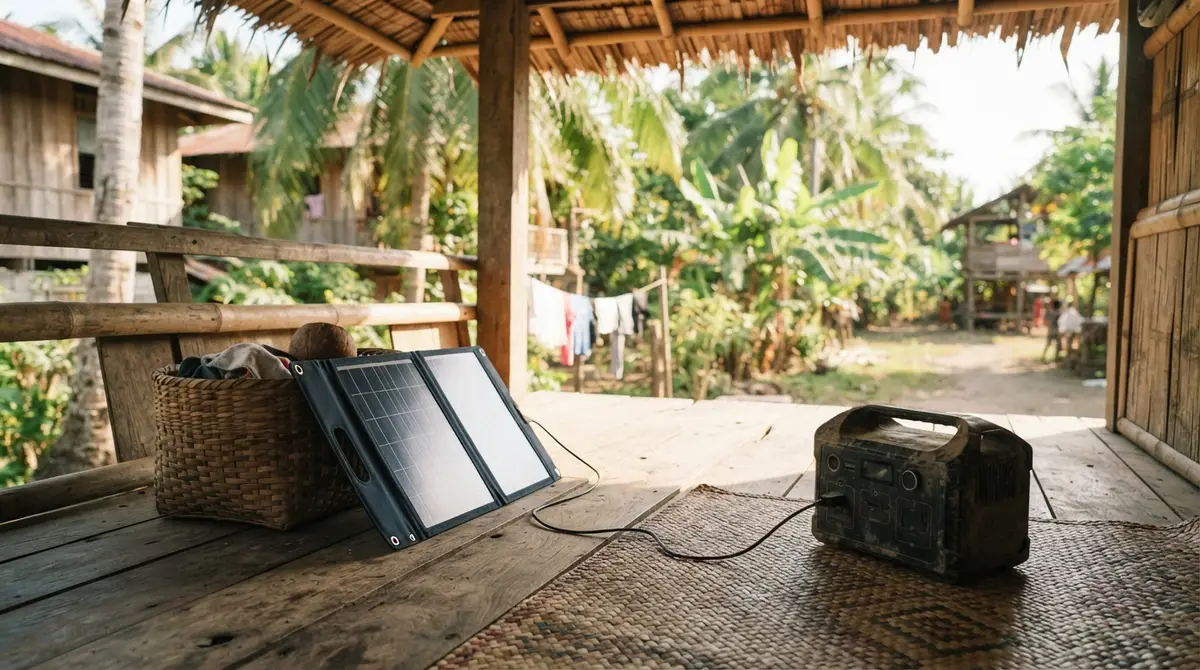
- Portable and foldable panels for charging a power station or battery bank. See flexible and portable solar panels for what to look for in wattage and build quality.
- Solar power banks for phones, small electronics, and emergency backup. See solar power banks.
- Small off-grid kits for a shed, tricycle, or outdoor setup that never connects to your main electrical panel — this kind of DIY is legal; see is DIY solar legal in the Philippines.
- Individual components — connectors, small charge controllers, cables — for a hobbyist or small off-grid project you’re assembling yourself.
What doesn’t work here
A whole-house grid-tied system needs more than panels shipped to your door:
- No installation. Mounting, wiring, and electrical connection require a licensed electrician or PCAB-licensed contractor. A marketplace seller ships a box; they don’t put it on your roof.
- No net-metering support. Net metering needs a Certificate of Compliance from a licensed PEE or RME and typically a PCAB-licensed installer’s work. There’s no path from a marketplace order to an approved grid connection.
- Warranty claims are hard to enforce. A panel bought through a marketplace listing often has no local distributor standing behind it. If the manufacturer’s warranty is real at all, routing a claim through a platform return process is slower and less certain than through an installer. See solar panel warranties explained.
- Specs and quality vary by seller, not by platform. The same listing title can come from different sellers with different actual product quality behind it.
How to verify a seller before buying
- Check whether the store is an official brand store or an individual reseller — official stores carry more accountability.
- Look at order volume and rating history, not just the star average.
- Confirm the listing states an actual wattage and, ideally, a datasheet — vague specs are a warning sign regardless of how good the price looks.
- Read recent reviews specifically, not just the overall rating, since quality can shift after a listing accumulates its first wave of reviews.
- Confirm what warranty, if any, is actually offered and how you’d file a claim — get this in writing before ordering, not after something fails.
Shipping, damage, and returns
Panels are fragile and bulky relative to typical parcel handling, so factor in the real risk of shipping damage — a cracked cell or bent frame from rough handling in transit. Photograph and inspect the item the moment it arrives, before signing for delivery if the courier allows it, and use the platform’s official return window immediately if anything looks off. Waiting even a few days past the return window to test the panel properly can leave you with no recourse at all, since most sellers won’t accept a return once that window closes regardless of the actual defect.
The bottom line
Marketplace buying is a legitimate channel for small, off-grid, DIY-friendly solar. For a home system meant to cut your Meralco bill through net metering, go through a licensed installer instead — see our broader guide on where to buy solar panels in the Philippines for how the different channels compare.
Frequently asked questions
Can I buy solar panels on Lazada or Shopee in the Philippines?
Yes, and it's a common way to buy small panels, portable kits, and power banks. It's not a substitute for a full home installation — marketplace sellers don't install systems or handle net-metering paperwork.
Is it safe to buy solar equipment from Lazada or Shopee sellers?
It can be, if you verify the seller — check their store rating, order history, and whether they're an official brand store versus an individual reseller. Quality and authenticity vary a lot seller to seller on both platforms.
Can I use a marketplace solar kit for net metering?
No. Net metering requires a licensed PEE or RME sign-off and a PCAB-licensed installer's work to pass your distribution utility's approval process. A self-sourced marketplace kit wired up without that chain won't get approved for grid export.
What happens if a Lazada or Shopee solar panel fails or underperforms?
You're filing a claim through the platform's return process or the seller directly, which is slower and less reliable than a manufacturer or installer warranty. Some listings carry a real manufacturer warranty; many don't, or the seller can't actually process one.
What's actually worth buying on these platforms?
Small, self-contained items: portable/foldable panels, solar power banks, plug-in balcony panels for a power station, and off-grid components for a shed or outdoor setup that never touches your main electrical panel.
How do I check if a marketplace seller is legitimate?
Look for an official brand store badge, a long order history with consistent ratings, product photos that match the actual listing (not stock images only), and a seller who lists a real wattage and datasheet rather than vague specs.