DIY Solar Installation in the Philippines: What's Actually Realistic
TL;DR
Small off-grid solar — a panel charging a battery for a shed or backup lights — is realistic to DIY. A grid-tied, net-metered system is not a homeowner project: net metering approval and the electrical permit both require sign-off from a licensed PEE, so the wiring has to be done to code from the start.
Small off-grid solar is a realistic DIY project. A grid-tied, net-metered system is not — not because the wiring is impossibly hard, but because approval requires a licensed Professional Electrical Engineer (PEE) to sign off on it, which in practice means the work has to be done to code from day one.
What can you actually DIY?
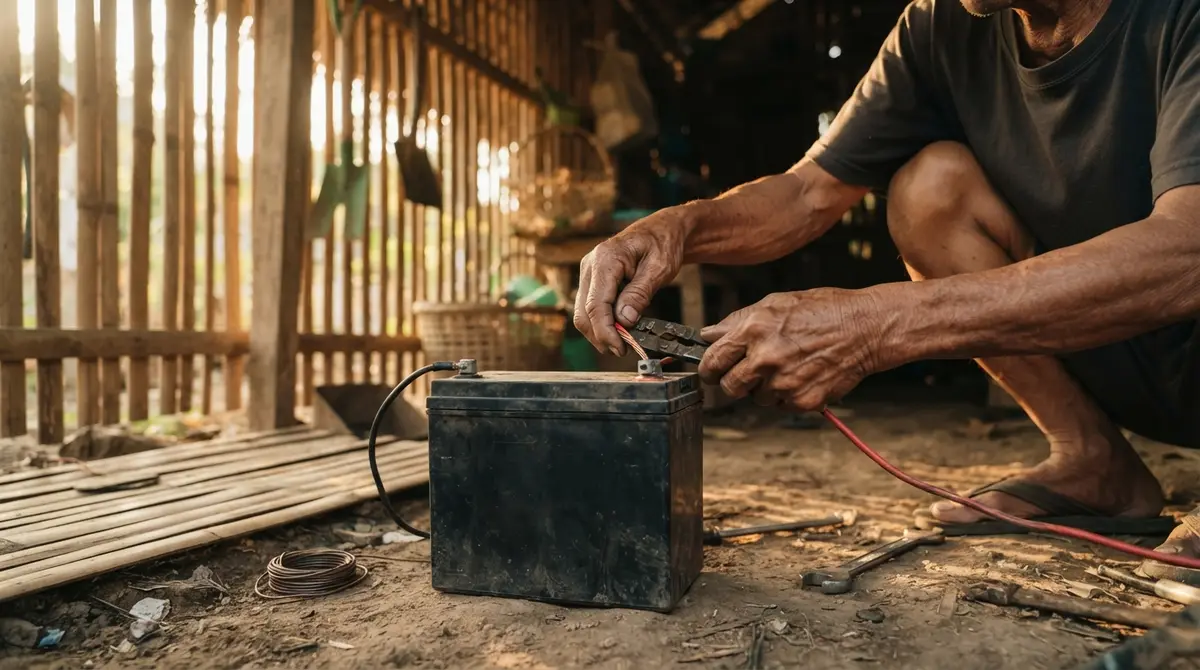
A standalone system that never touches your house’s main panel or the grid. Think a panel and battery charging lights in a nipa hut, a portable power station topped up by a folding panel, or a solar water pump for a well far from the house. None of this triggers net metering rules because none of it connects to the utility.
What you generally should not DIY:
| Task | Who it’s for |
|---|---|
| Choosing panel layout, comparing quotes | You |
| Non-electrical mounting prep (measuring, planning) | You, if confident on the roof |
| DC wiring, connectors, combiner boxes | Licensed electrician / PEE |
| Inverter installation and configuration | Licensed electrician / PEE |
| Connection to your breaker panel | Licensed electrician / PEE |
| Net metering paperwork and CoC | Licensed PEE or RME |
Why does a grid-tied system need a licensed PEE regardless of your skill level?
Because the utility isn’t evaluating your competence, it’s requiring a document. A Certificate of Compliance (CoC), signed and sealed by a PRC-licensed PEE or Registered Master Electrician (RME), certifies the installation meets the Philippine Electrical Code. Meralco and other distribution utilities won’t process a net metering application without one, and most PEEs won’t sign a CoC for wiring they didn’t do or directly supervise — they’re putting their license on the line. See our full breakdown in is DIY solar legal in the Philippines and the complete document checklist in solar permits and requirements.
Where does the DC array being live change the calculus?
A solar array produces DC voltage any time it’s exposed to daylight — there’s no “off” switch on the panels themselves the way there is with grid power. That’s true during installation, during a brownout, and during a repair. Homeowner tasks reasonably stop at the breaker and the inverter display: checking that the system is producing, glancing at fault codes, keeping panels clean from the ground. Anything past that — opening a combiner box, touching a DC connector, working on the roof array — is licensed-electrician territory. Our overview of how a panel connects to an inverter covers the concept without walking anyone through doing it themselves.
Does DIY actually save meaningful money on a grid-tied system?
Less than the sticker price suggests. You still pay a PEE for the CoC. Most homeowners end up hiring a PCAB-aligned installer for the electrical work anyway once they understand the permit chain, so the “DIY” part shrinks to planning and equipment sourcing — useful, but not the bulk of install cost. Meanwhile a failed inspection, a void warranty from non-approved wiring, or a redo after a botched connection routinely costs more than professional labor would have upfront.
What if you’re off-grid and want to go it alone?
That’s the legitimate DIY lane. If you’re in an area without reliable grid access, see off-grid solar for Philippine provinces for what a standalone system involves — sizing, battery choice, and where the same DC-safety rules still apply even without a grid connection to worry about.
The bottom line
Scope your project honestly. If it’s a standalone battery-and-panel setup that never touches your house wiring, DIY is realistic and legal. If it’s meant to offset your Meralco bill through net metering, budget for a licensed PEE and treat the electrical work as professional scope from the start — not a corner to cut.
Frequently asked questions
Can I install my own solar system in the Philippines?
You can install a small off-grid setup yourself — a panel and battery that never connects to your house wiring or the grid. A grid-tied system that applies for net metering needs a licensed PEE or RME to sign the Certificate of Compliance, which in practice means the electrical work has to be done by or under a licensed professional.
What parts of a solar install are actually safe to DIY?
Non-electrical work: planning panel layout, comparing quotes, choosing equipment, and sometimes mounting hardware if you're confident on the roof. Anything involving DC wiring, the inverter, or the connection to your breaker panel should go to a licensed electrician.
Why can't I just DIY the wiring and have an electrician inspect it after?
Most electricians and PEEs won't certify work they didn't do or directly supervise, because they're putting their license behind it. Utilities also expect the CoC to reflect who actually performed the installation, not a retroactive sign-off on someone else's wiring.
Is off-grid DIY solar actually legal?
Yes. A standalone system that doesn't connect to your main panel or the grid isn't subject to net metering rules. This covers things like a solar-charged battery for lighting, a water pump, or a portable power station.
How much money does DIY actually save on a grid-tied system?
Less than it looks like on paper. You still need a licensed PEE for the CoC, a PCAB-aligned contractor typically handles the install anyway, and DIY wiring mistakes that fail inspection or void a warranty cost more to fix than professional labor would have cost upfront.
What happens if I try to DIY a grid-tied install anyway?
Your distribution utility will typically reject the net metering application without a valid CoC, so you can't get bill credits for exported power. You also risk a failed LGU electrical inspection, a voided panel or inverter warranty, and a real fire or shock hazard from DC wiring that's live any time the sun is up.