Solar Generator vs Inverter: What's the Difference? (Philippines)
TL;DR
A solar generator is a portable battery with an inverter and charge controller built into one box — it stores energy but generates none by itself. A solar inverter is a single component of a fixed rooftop system. Buy a solar generator for portable backup; buy a proper system with an inverter to actually cut your bill.
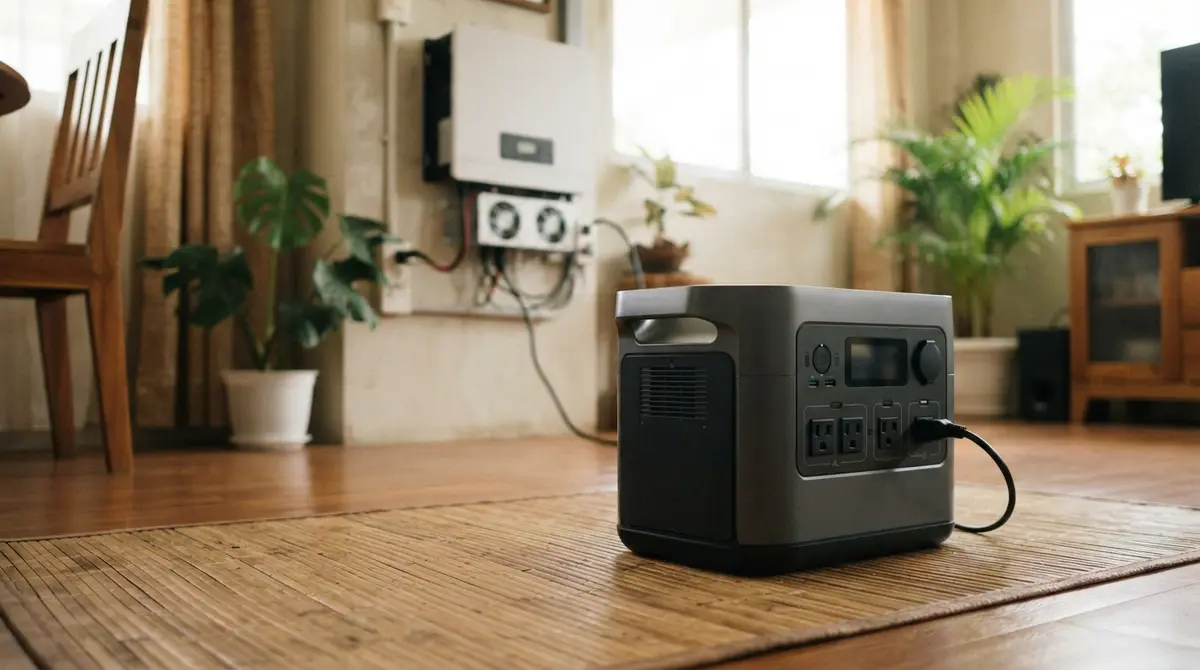
The names are confusing, so start here: a solar generator generates nothing. It is a portable battery with an inverter and charge controller built into one box. A solar inverter is a single component inside a fixed rooftop system.
One is a finished consumer product you buy off a shelf. The other is a part inside a system an installer builds on your roof. They solve different problems, and conflating them leads people to buy a ₱40,000 box expecting it to cut their Meralco bill.
What each one actually is
| Solar generator | Solar inverter | |
|---|---|---|
| What it is | Portable all-in-one battery unit | Component of a fixed system |
| Generates power | No — stores only | No — converts DC to AC |
| Needs installation | No, plug and play | Yes, part of a full install |
| Typical capacity | Roughly 0.5-3 kWh | Rated in kW throughput, not storage |
| Cuts your bill | Barely | Yes, as part of an array |
| Handles brownouts | Yes, for what it can carry | Only if hybrid, with a battery |
What a solar generator is genuinely good at
Outage backup with zero installation. You buy it, charge it, and it works. No electrician, no permits, no roof. For a household that mainly wants the router, lights, phones, and a fan to survive a brownout, this is a reasonable and proportionate purchase.
Portability. Camping, provincial trips, a market stall, a work site. Nothing fixed to a roof competes here.
A small step into solar. Pair it with a folding panel and you have a genuine, if tiny, solar system you can take away with you.
Our backup power section covers the units available in the Philippines, including EcoFlow and Bluetti, and our solar power station guide covers sizing.
What it is bad at
Cutting your electric bill. This is the expectation that costs people money. A solar generator holds perhaps 1-3 kWh. A Philippine home using 500 kWh a month gets through roughly 17 kWh a day. Even used perfectly, the unit covers a small fraction of one day.
Worse, if you charge it from a wall socket you are buying electricity at about ₱14-15/kWh, storing it at a round-trip loss, and using it later. That is a net cost, not a saving. It only makes energy sense when charged from panels.
Running heavy loads. Aircon, electric kettles, irons, dryers. Most portable units cannot start an aircon compressor at all, and the ones that can will empty in under an hour.
What a solar inverter does
The inverter is the component that makes a rooftop array usable. Panels produce DC; your house runs on AC. The inverter converts it, and depending on type also manages export to the grid and charging of a battery.
- String (grid-tied): converts and exports under net metering. Shuts down during a brownout for safety, so it gives you no outage protection.
- Hybrid: the same, plus battery charging and the ability to keep running loads when the grid is down.
- Microinverter: one small unit per panel rather than one central unit.
Full comparison in solar inverter types, and pricing in hybrid inverter price.
Which should you buy?
Buy a solar generator if your problem is brownouts, you want something today, you rent, or you need portability. Budget for what it can actually carry, not what the marketing implies.
Build a solar system with an inverter if your problem is a ₱8,000 monthly bill. Only generation reduces that, and generation means panels on a roof. Start with what size solar system for my bill.
Do both if you want daytime generation plus outage cover without paying for whole-home storage. A grid-tied array with a portable unit for outages is often cheaper than a hybrid system with a large battery, and it covers most of the same ground. Our typhoon and brownout guide weighs the options.
One thing to watch in the marketing
Portable units are frequently advertised with a nameplate capacity and a peak output figure that flatter what they can really do. Check three numbers: usable watt-hours, continuous output in watts, and how long it takes to recharge from the panel you would actually buy. A unit that takes eight hours of good sun to refill is not going to carry you through consecutive days of outage during a storm — which is precisely when you would want it.
Frequently asked questions
What is the difference between a solar generator and a solar inverter?
A solar generator is a self-contained portable unit combining a battery, an inverter, and a charge controller. A solar inverter is one component inside a fixed rooftop system, converting DC from the panels to AC for your home. One is a product; the other is a part.
Does a solar generator actually generate power?
No, despite the name. It stores energy that has to come from somewhere else — a wall socket or a solar panel you connect to it. It is a battery in a box. Calling it a generator is marketing, not engineering.
Which one do I need for brownouts?
For portable, plug-in backup that needs no installation, a solar generator. For whole-house backup that also cuts your bill, a hybrid inverter with a proper battery. The generator is cheaper and far more limited.
Can a solar generator lower my electric bill?
Barely. Its capacity is small and, unless you pair it with panels, you are charging it from the grid and discharging it again at a loss. Bill reduction comes from generating your own power, which needs a rooftop array.
Is a solar generator cheaper than a solar system?
Much cheaper up front and much more expensive per usable kWh. You are paying for portability and convenience, not for energy. A fixed system costs more on day one and delivers far more over its life.
Can I use both?
Yes, and plenty of homes do. A rooftop grid-tied system handles daytime generation and bill reduction, and a portable unit covers outages without the cost of whole-home storage. It is a sensible middle path.