MC4 Connectors Explained: Why They Matter for Solar Safety
TL;DR
MC4 connectors are the small weatherproof plugs joining panel cables to each other and to the inverter, and a cheap or mismatched one is a genuine fire risk because poor contact creates resistance and heat. Insist on one genuine connector brand end-to-end, never mixed, on every quote you accept.
MC4 connectors are the small, weatherproof plugs that join one solar panel’s cable to the next and the strings to the inverter, and a cheap or mismatched one is one of the more common causes of rooftop solar fires. The name comes from a specific connector design, now used loosely for any similar-looking plug, which is exactly where the risk creeps in.
What does an MC4 connector actually do?
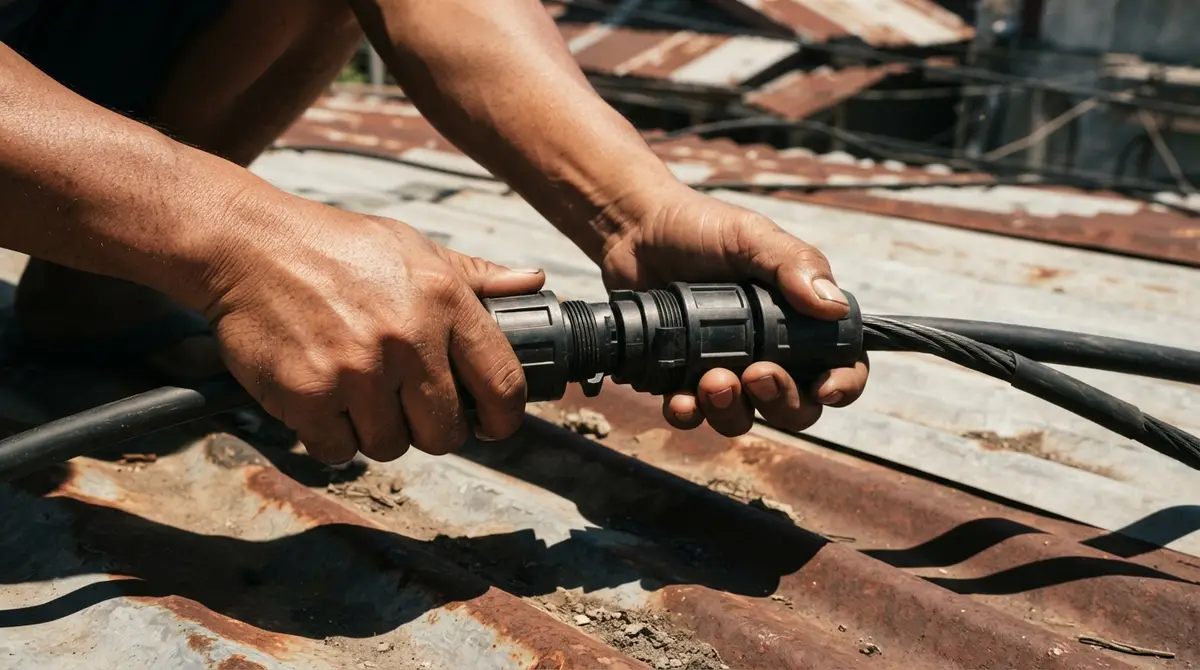
Every panel ships with two short cables ending in a matched pair of connectors, one male and one female, that click together into a sealed, latching joint. That joint carries the full current of the string it’s part of, sitting exposed on a hot roof for the life of the system. Done properly, with a genuine, correctly crimped connector, that joint should last decades without loosening, corroding, or letting water in.
Why does connector quality matter this much?
Because the failure mode is heat, not just a loose plug. If the internal contact pins don’t seat fully, whether from a poor crimp or a mismatched connector, resistance builds at that joint. Resistance under load produces heat, and sustained heat on a DC circuit that cannot easily be switched off is how connector faults turn into fires. For the panel-level version of the same failure mode, see solar panel hot spots, where the mechanism is identical: current forced through a bad contact point.
Why is mixing connector brands dangerous?
This is the part most homeowners never hear. Connectors from different manufacturers can look identical, use the same “MC4” name, and still click together, but the pins inside are machined to slightly different tolerances. Mate a genuine connector to a clone, or two different clones to each other, and the pins may not seat fully even though the plug clicks shut. The rule installers should follow, and one you should ask about, is simple: one genuine connector brand end to end, crimped with the matching tool, never mixed, even when both sides say “MC4.”
How do you tell a genuine connector from a fake?
It’s hard to tell by eye at the point of installation, which is exactly the problem. Counterfeits copy the markings but tend to give themselves away over time: they yellow and turn brittle under UV faster than genuine parts, and the crimp quality is usually visibly worse on close inspection. Genuine connectors cost meaningfully more than marketplace clones, which is precisely why fakes are common on lowball quotes. A detailed look at one major genuine brand, including rough pricing, is in the Stäubli MC4 connector review, and the full cabling and connector picture is in solar cable, wire and connectors in the Philippines.
Who should be handling your connectors?
Your installer, at the time of install, using the correct crimping tool for whichever brand they’ve chosen. This isn’t a homeowner task before or after installation. The DC side of a solar array is live whenever the sun is up, and connector work sits squarely on the DC side, so it belongs to your installer or a licensed professional, not a DIY fix. If you’re pricing your own DC wiring separately, our solar cable size calculator explains what goes into sizing that run, though final specification is still a licensed engineer’s call.
What should you check before accepting a quote?
Ask directly: which connector brand are you using, is it genuine, and is it consistent across every panel and string in my system? A vague answer, or a quote that doesn’t specify, is worth pushing on. Connector cost is a small fraction of a system’s total price, so there’s rarely a real reason for an installer to cut corners here, and a willingness to answer clearly is a decent signal about the rest of their workmanship too.
Frequently asked questions
What is an MC4 connector?
The small, weatherproof plug that joins one solar panel's output cable to the next, and the strings to the inverter. Every panel ships with a matched male and female connector that click together into a sealed, latching joint carrying full string current.
Why does connector quality matter for solar safety?
Because the failure mode is heat, not just a loose plug. If the internal pins don't seat fully, resistance builds at that joint, resistance under load produces heat, and sustained heat on a live DC circuit is how connector faults turn into rooftop fires.
Why is it dangerous to mix MC4 connector brands?
Connectors from different makers can look identical and still click together, but the pins inside are machined to slightly different tolerances. Mating a genuine connector to a clone, or two different clones, can leave the pins not fully seated even though the plug shuts.
How can I tell a genuine MC4 connector from a fake?
It's hard to spot at installation. Counterfeits copy the markings but tend to yellow and turn brittle under UV faster, and the crimp quality is usually visibly worse on close inspection. Genuine connectors also cost meaningfully more than marketplace clones.
Can I install or replace MC4 connectors myself?
No. Connector work sits on the DC side of the array, which is live whenever the sun is up, and it needs the correct crimping tool for the specific brand in use. This is your installer's job, not a homeowner task before or after installation.
What should I ask an installer about connectors before accepting a quote?
Ask which connector brand they use, whether it's genuine, and whether it's consistent across every panel and string. A vague answer or an unspecified brand on the quote is worth pushing on, since connector cost is a small fraction of total system price.