Solar Panel Hot Spots: Causes, Signs, and What to Do
TL;DR
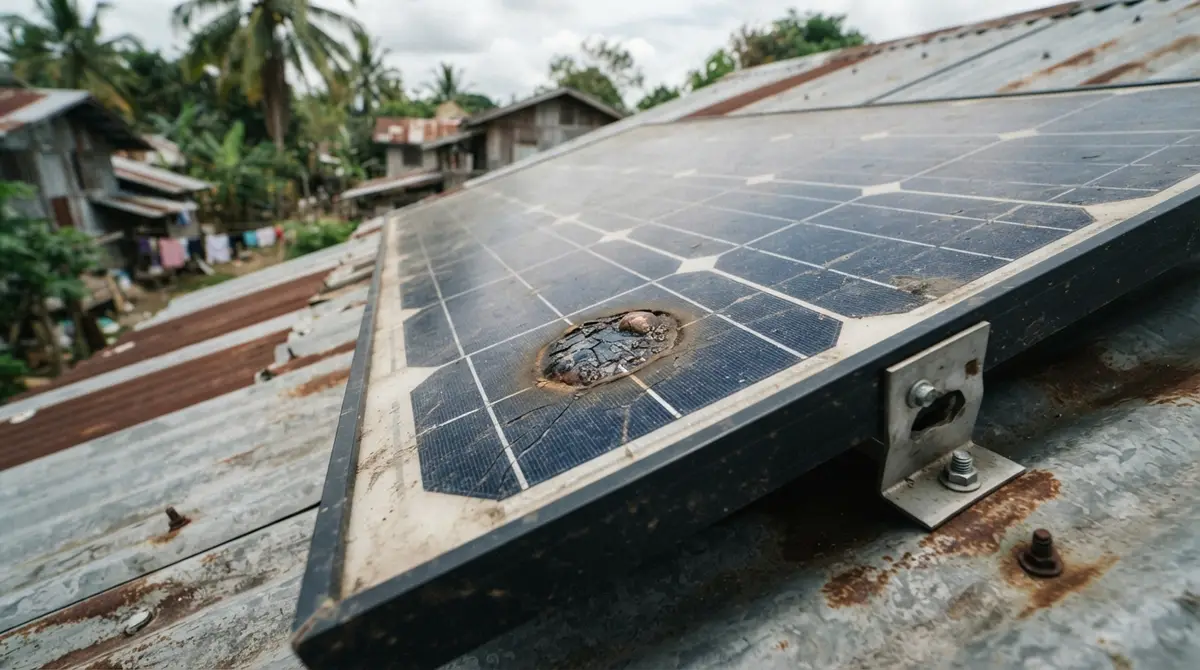
A hot spot forms when one cell in a panel is shaded, cracked, or dirty and ends up dissipating power as heat instead of producing it. Left alone it can scorch the backsheet and become a fire risk. Signs include visible discolouration, browning, or bubbling — treat any of these as urgent rather than cosmetic.
A hot spot forms when one cell stops producing while the rest of the string keeps pushing current through it. Instead of generating, that cell dissipates the energy as heat. Localised, sustained heat then degrades the materials around it.
This is one of the few solar faults that is a genuine safety issue rather than just a performance annoyance. Visible scorching on a panel should be treated as urgent.
What triggers one
Persistent shading. The commonest cause. A vent, an antenna, a growing tree, a neighbour’s new structure — anything that shades the same cells day after day. See how shading affects solar output.
A cracked cell. Micro-cracks from hail, impact, walking on panels during installation, or rough handling in transit. Often invisible at first and they propagate over time.
Heavy soiling. Bird droppings and thick dirt on one spot act exactly like shade. This is a good reason to actually clean panels rather than trusting rain — see how to clean solar panels.
Manufacturing defects. Cell mismatch or a soldering fault. Less common with tier-1 manufacturers, which is part of what you pay for — tier 1 vs tier 2 panels.
A failed bypass diode. Diodes give current a path around a problem cell. When one fails, that protection quietly disappears.
What to look for
| Sign | What it suggests |
|---|---|
| Brown or scorched patch on the back | Sustained hot spot, likely already damaged |
| Bubbling or delamination of the backsheet | Advanced heat damage — urgent |
| A visibly darker cell from the front | Cell fault or shading effect |
| One string producing noticeably less | Possible hot spot or dropped panel |
| Burning smell near the array | Stop and call an electrician immediately |
Definitive confirmation usually needs a thermal camera, which shows the affected cell running much hotter than its neighbours. A competent installer will have one or be able to arrange an inspection.
Do not go on the roof yourself to inspect. Philippine sheet roofing is not designed to be walked on, and the array is electrically live whenever the sun is up — see DC breaker sizing and isolation for why switching things off does not make it safe.
What to do about it
1. Photograph everything from the ground, with a zoom if you have one. Date the photos. This is your evidence for a warranty claim.
2. Report it promptly. Delay weakens a claim and lets damage progress. Contact your installer and, if the panel is under manufacturer warranty, ask them to raise it — see how to claim a solar warranty.
3. Fix the underlying cause. If shade or soiling caused it, a replacement panel in the same position will develop the same fault. Trim the tree, relocate the obstruction, or establish a cleaning routine.
4. Have the whole array inspected, not just the obvious panel. Whatever caused one hot spot may be affecting others less visibly.
Will the warranty cover it?
It depends on cause, which is why documentation matters:
- Manufacturing defect — generally covered under the product warranty
- Shading from something that grew or was built — generally not
- Soiling from never cleaning — generally not
- Installation damage, such as cracks from being walked on — the installer’s responsibility, not the manufacturer’s
The distinction is exactly why photographs and a prompt report matter. Our warranties guide covers what product and performance warranties each actually promise.
Reducing the risk
- Design out the shade at survey stage rather than mitigating it later
- Clean regularly, particularly for bird droppings which are concentrated and opaque — bird proofing covers prevention
- Insist nobody walks on the panels, during installation or maintenance
- Monitor per-string output so a dropped panel shows up in weeks not years — solar monitoring
- Include an inspection in periodic maintenance
Frequently asked questions
What causes a hot spot on a solar panel?
Something stops one cell producing while the rest of the string keeps pushing current through it. That cell then dissipates the energy as heat. The usual triggers are persistent shading, a cracked cell, heavy soiling, or a manufacturing defect.
How do I know if a panel has a hot spot?
Visible signs are discolouration, brown or burnt patches, or bubbling on the panel's back. From the front you may see a distinctly darker cell. Confirmation normally needs a thermal camera, which a good installer will have.
Is a hot spot dangerous?
It can be. Sustained localised heat degrades the encapsulant and backsheet and in the worst case can start a fire. This is one of the few solar faults that is a genuine safety issue rather than only a performance one.
Does a hot spot mean I need a new panel?
Usually yes, if there is visible scorching. The damage does not reverse. If the cause was external — shade or soiling — fix that too, or the replacement will develop the same problem.
Are hot spots covered by warranty?
A manufacturing defect generally is. A hot spot caused by shading from a tree that grew, or by never cleaning the panels, generally is not. Photograph everything and raise it promptly, since delay weakens a claim.
Do bypass diodes prevent hot spots?
They reduce the risk substantially by giving current a path around a problem cell, and modern panels all have them. They limit the problem rather than eliminate it, and a failed diode removes that protection silently.