Solar DC Breaker Sizing and Isolation (Philippines)
TL;DR
Solar DC protection must be rated specifically for DC at the system's voltage. An AC-rated breaker used on a DC circuit is dangerous because DC arcs do not self-extinguish the way AC arcs do. Sizing follows the array's short-circuit current with a code margin, and must be specified by a licensed practitioner.
DC protection is the part of a solar install that homeowners never see and that matters most for safety. The core fact: DC is harder to switch than AC, and devices rated for one are not interchangeable with the other.
AC voltage crosses zero 120 times a second in a 60 Hz system. That natural zero crossing helps an arc extinguish itself when contacts open. DC has no zero crossing. An arc drawn across opening contacts on a DC circuit can sustain itself, which is why DC-rated devices are built differently and why substituting an AC breaker is dangerous rather than merely incorrect.
What each device does
| Device | Purpose |
|---|---|
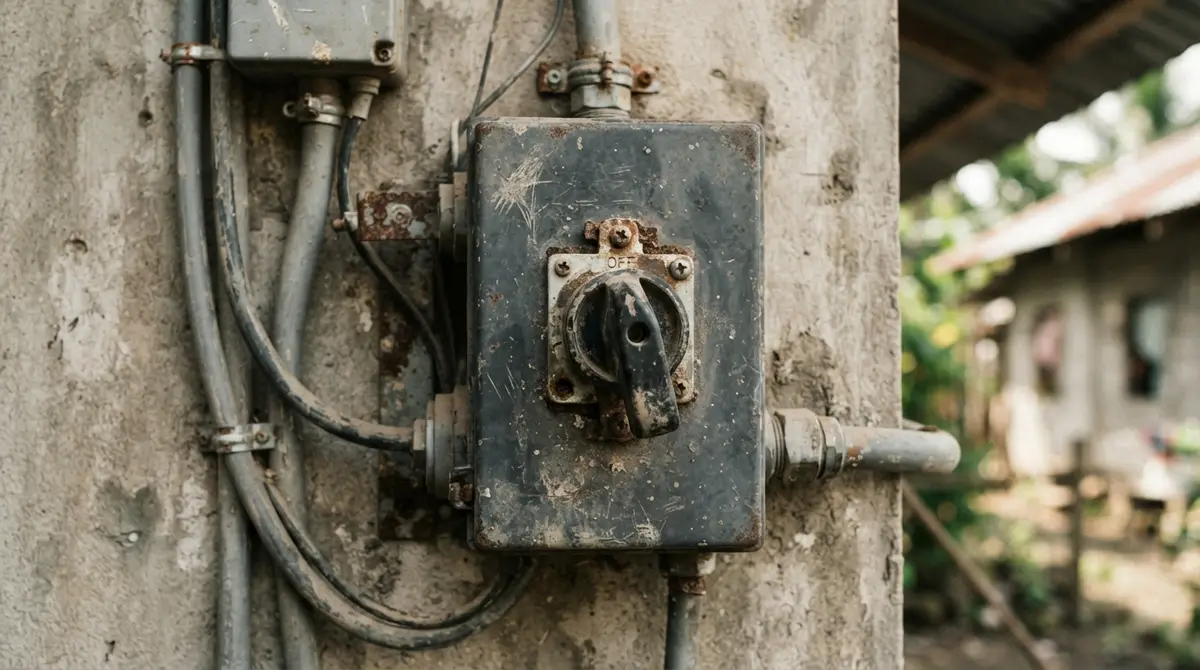
| DC isolator / disconnect | Safely disconnects the array for maintenance |
| DC breaker / fuse | Interrupts overcurrent on a string or combined circuit |
| Surge protection device | Diverts voltage surges away from the inverter |
| AC breaker | Protects the inverter’s connection to your consumer unit |
Many installs need several of these. A hybrid system with a battery adds protection on the battery circuit too. The inverter’s own internal protection does not remove the need for any of them.
How sizing is determined
Sizing follows from the array’s electrical characteristics, not from a rule of thumb:
- Short-circuit current of the string, with the margin required by the Philippine Electrical Code
- Maximum system voltage, which on a string array can be several hundred volts DC — the device must be rated for it
- Temperature derating, because Philippine roof spaces run hot and ratings assume cooler conditions
- Number of strings in parallel, which changes fault current available
This must be specified by a licensed professional electrical engineer. Their signed single-line diagram is required for your net metering application in any case, and it should show the protection.
The safety point that matters most
The array is live whenever there is light on it.
Switching off every breaker in your house does not de-energise the panels or the DC cable between them and the isolator. This is the fundamental difference between solar and every other appliance in a home, and it is why the safe boundary for a homeowner is:
- Fine: reading the display, resetting a tripped AC breaker once, cleaning panels from the ground
- Not fine: touching DC wiring, opening the inverter, working on the array, or switching a DC isolator under load without being shown how
Our why is my solar not working guide keeps its troubleshooting steps inside the safe boundary for exactly this reason.
What to verify on your install
You do not need to size anything yourself. You do want to confirm these exist:
- A clearly labelled DC isolator near the inverter, and often a second one at the array
- DC-rated protection, with the rating visible on the device — check it says DC and the voltage, not just an amp figure
- Surge protection, particularly important given Philippine lightning activity — see solar surge protection
- Proper labelling so anyone working on the property later knows a live DC source is present
- Earthing and bonding as specified
Photograph the finished installation including the protection devices. If you ever need a warranty claim or an insurance claim, that record is worth having — see solar panel insurance.
Questions worth asking your installer
- Are all DC devices rated for DC at the system’s maximum voltage?
- Is surge protection included on both the DC and AC sides?
- Where are the isolation points, and which ones may I operate?
- Is the array labelled so an emergency responder knows it is there?
An installer who answers these clearly is telling you something useful about the rest of their work. One who treats them as fussy is telling you something too — see how to choose a solar installer and common installation mistakes.
Frequently asked questions
Can I use a normal AC breaker on the DC side?
No. This is genuinely dangerous, not a technicality. AC crosses zero volts 120 times a second, which helps an arc self-extinguish. DC does not, so an arc can sustain itself across opening contacts. DC circuits need devices rated for DC at that voltage.
How is DC breaker size determined?
From the array's short-circuit current with the safety margin the Philippine Electrical Code requires, adjusted for temperature and installation conditions. It must also be rated for the maximum system voltage, which on a string array can be several hundred volts.
What's the difference between a breaker and an isolator?
A breaker protects against overcurrent and can interrupt a fault. An isolator is a switch for safely disconnecting the array for maintenance. Many installs need both, and some devices combine the functions.
Do I need DC protection if I have a hybrid inverter?
Yes. The inverter's internal protection does not remove the need for a means of isolating the array and for correctly rated overcurrent protection. Anyone servicing the system needs a way to safely disconnect it.
Can I switch the DC isolator myself?
Only if your installer has shown you and told you it is safe to do so. Switching a DC isolator under load can draw an arc. If you are troubleshooting, work through the AC side and the display first.
Does the array stop being live if I switch everything off?
No, and this is the single most important thing to understand. Panels generate whenever light falls on them. The wiring between the panels and the isolator stays live regardless of any switch position.