Solar Surge Protection in the Philippines: Lightning and SPDs
TL;DR
The Philippines sees heavy lightning activity and a rooftop array is the most exposed part of a house. Surge protection devices divert voltage spikes away from the inverter, which is the expensive component most likely to be destroyed. SPDs on both the DC and AC sides are worth insisting on, and they are cheap relative to what they protect.
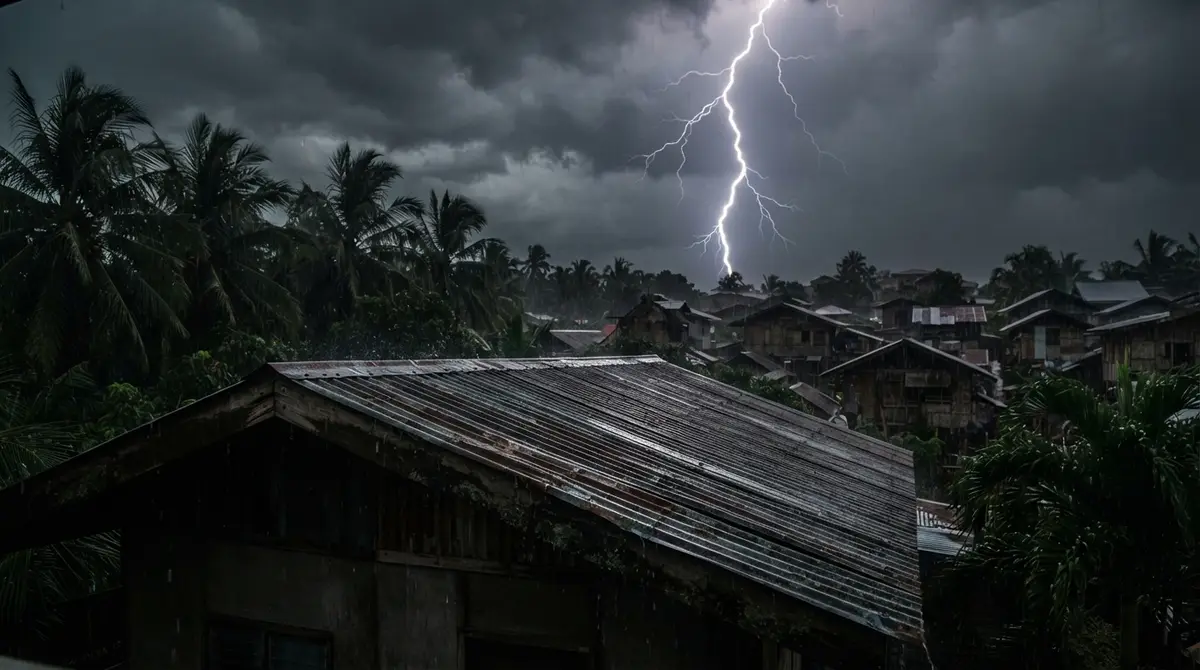
The Philippines sees substantial lightning activity, and a rooftop solar array is the most exposed electrical thing on your house — elevated, spread over a large area, and connected to long cable runs that can pick up induced surges from strikes some distance away.
The component that dies is almost always the inverter. It is the most expensive replaceable part of the system, commonly ₱25,000-150,000 for a hybrid unit, and surge protection devices cost a small fraction of that. The arithmetic is not close.
What an SPD actually does
A surge protection device gives a voltage spike a preferred path to earth instead of through your inverter. Under normal conditions it does nothing. When voltage exceeds a threshold, it conducts, diverting the surge away.
What it handles:
- Induced surges from nearby strikes — by far the most common event
- Switching surges from the grid
- Voltage spikes arriving on the AC side
What it does not handle: a direct lightning strike. That is a different problem needing a lightning protection system with air terminals and dedicated down-conductors. An SPD is not a substitute, and any installer implying otherwise is overselling.
Where they belong
Surges can arrive from either direction, so protection usually goes on both sides:
| Location | Protects against |
|---|---|
| DC side, between array and inverter | Surges induced on the array and DC runs |
| AC side, between inverter and consumer unit | Surges arriving from the grid |
| Battery circuit, where fitted | Surges reaching storage |
A system protected only on the AC side leaves the array-side path open, which is the more exposed one on a rooftop install.
They wear out, and you cannot tell by looking
This is the part that gets forgotten. SPDs absorb energy and degrade doing it. A device that has taken several surges may be spent while looking exactly as it did on day one.
Most have a status indicator — a small window that changes colour, or a flag. Checking it belongs in routine maintenance alongside panel cleaning and the checks in our maintenance guide.
Worth asking your installer: where are the SPDs, what does a healthy indicator look like, and can I check them myself from the ground?
Earthing is half the job
An SPD needs somewhere to send the surge. Without proper earthing and bonding, it cannot do its job regardless of how good the device is.
That means the array frame, mounting structure, and system earth all correctly bonded to a suitable earth electrode, to the Philippine Electrical Code. This is specified by the licensed professional electrical engineer who signs your drawings — the same drawings required for your net metering application.
If a quote includes SPDs but says nothing about earthing, that is worth questioning. The two only work together.
What to ask for in the quote
- SPDs on both DC and AC sides, specified as line items
- The device type and rating, not just “surge protection included”
- Earthing and bonding specified and included
- Whether lightning protection for the structure is recommended for your location, which is a separate and larger question
- How to check SPD status and how often
The cost is modest. The thing it protects is not. This is one of the few optional-looking line items where cutting it is a straightforwardly bad trade — see common installation mistakes for the others.
And check your insurance
Even with good protection, lightning damage happens. Confirm your policy covers it and that the array is declared — many Philippine policies treat these perils as extensions rather than defaults. Our solar panel insurance guide covers what to confirm in writing, and typhoon and brownout preparation covers the wider resilience picture.
Frequently asked questions
Do I really need surge protection on solar in the Philippines?
It is strongly advisable. The country sees substantial lightning activity, and a rooftop array is both elevated and connected to long cable runs that can pick up induced surges. The inverter is usually the first thing destroyed, and it is the most expensive replaceable component.
Does an SPD stop a direct lightning strike?
No. Surge protection devices handle induced surges and nearby strikes, which are far more common. A direct strike is a different problem requiring a lightning protection system, and no SPD is a substitute for that.
Where should SPDs be installed?
Typically on both the DC side, between the array and the inverter, and the AC side, between the inverter and your consumer unit. Surges can arrive from either direction — from the array, or from the grid.
Do SPDs wear out?
Yes. They absorb energy and degrade doing it. Most have a status indicator showing whether the device is still functional. Checking it should be part of routine maintenance, since a spent SPD looks identical to a working one from the outside.
Is surge protection included in a standard solar quote?
Not always, and it is a common omission at the cheaper end. Ask for it explicitly as a line item. The cost is small relative to an inverter replacement, which is what you are insuring against.
Does home insurance cover lightning damage to solar?
It may, if the peril is covered and the installation is declared. Many Philippine policies treat these as extensions rather than defaults, so confirm in writing rather than assuming.