Solar Panel Insurance in the Philippines: What's Covered
TL;DR
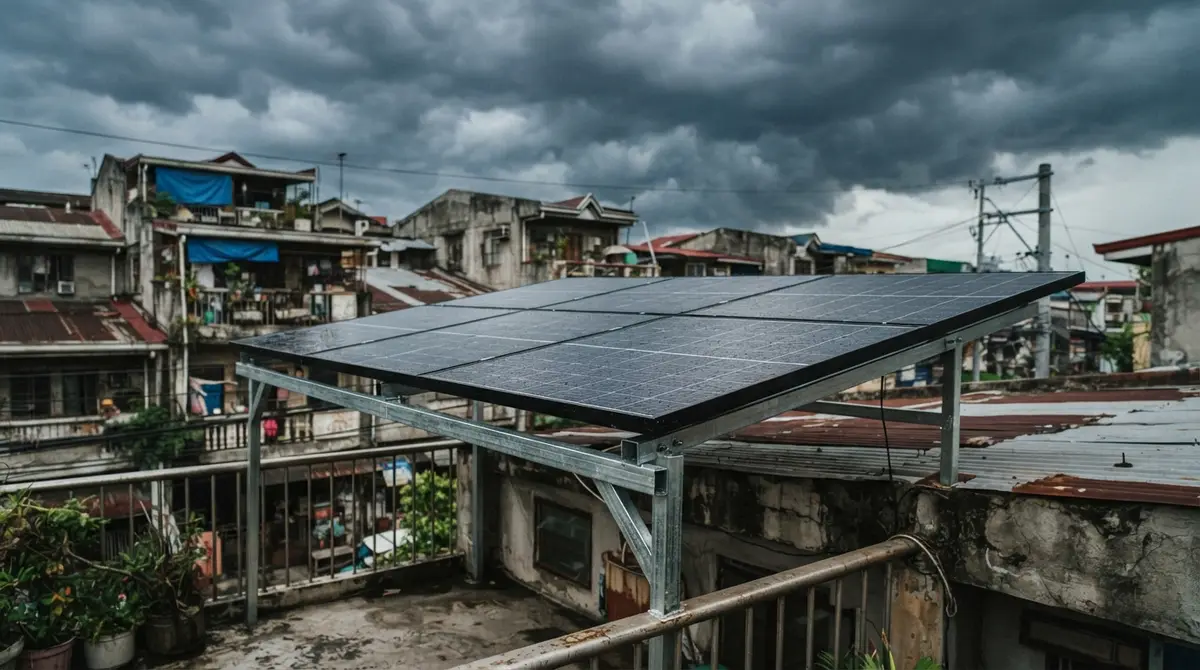
Rooftop solar is usually treated as part of the building rather than as separate property, so it may fall under an existing homeowner's policy — but only if you declare it and the sum insured is raised to match. Typhoon and flood cover are frequently add-ons in the Philippines, not defaults, and warranties cover defects rather than storm damage.
Rooftop solar in the Philippines is normally treated as a permanent improvement to the building, not as separate contents. That means it may already fall within the scope of a homeowner’s policy — but only if you tell your insurer it exists and raise the sum insured to reflect it.
Leaving a ₱300,000 array undeclared does not just leave the panels uninsured. It can leave you underinsured on the whole property, because the declared rebuilding value no longer matches reality.
Policy terms vary by insurer and change over time. Nothing here is a substitute for reading your own policy schedule and getting confirmation in writing.
The three things that actually need checking
1. Is the installation declared and the sum insured increased?
Call your insurer once the system is commissioned. Give them the installed value from your invoice. Ask for written confirmation that the array — and the battery, if you have one — is included in the sum insured.
2. Are typhoon, flood, and related perils covered?
This is the one that matters most in the Philippines and the one most often assumed rather than verified. Basic fire policies frequently exclude these, with cover available as an extension. Given that the main physical risk to a rooftop array here is a storm, a policy without that extension is covering the wrong thing.
Ask specifically about typhoon, flood, and impact by falling objects or debris.
3. Does it cover the roof, or just the panels?
An array is bolted through the roof. If wind lifts the mounting system, the damage is usually to both. Confirm how a combined claim is treated.
Insurance and warranty are not the same thing
People routinely conflate these, and installers do not always correct them.
| Warranty | Insurance | |
|---|---|---|
| Covers | Manufacturing defects, output degradation | Sudden accidental damage, storm, fire, theft |
| Provided by | Manufacturer and installer | Insurer, for a premium |
| Typhoon damage | No | Only if the peril is covered |
| Panel underperforming after 10 years | Yes, under performance warranty | No |
| Panel smashed by debris | No | Yes, if covered |
A panel destroyed by flying roofing in a typhoon is not a manufacturing defect, so the warranty is irrelevant to it. Equally, a panel producing 60% of rated output in year twelve is a warranty matter, not an insurance claim. You need both, and they do not overlap. Our warranties guide covers what the product side actually promises.
What reduces your risk in the first place
Insurance is the backstop. The mounting is the primary defence, and it is decided at install time:
- Wind-rated mounting appropriate to your area. Larger panels catch more wind — see solar panel wattage guide.
- Correct fixing into structure, not just into roofing sheet. This is a common shortcut and it is what fails first.
- Roof condition assessed before installation. Mounting a heavy array on a roof that was already marginal creates a problem that is nobody’s warranty. Our roof types and mounting guide covers what different Philippine roofs can carry.
Our typhoon and brownout guide covers preparing a system for storm season more broadly. Theft is the other insured peril worth designing against rather than only insuring — see solar panel theft and how to secure your array for the fixings, enclosures, and records that matter.
Ask the installer about their cover too
Separately from your own policy, ask whether the installer carries liability insurance for the work itself. If a worker puts a foot through your ceiling or a dropped panel cracks a tile, that should be theirs to resolve.
Get this answer before the job, not after. It is also a reasonable proxy for how established a contractor is — see how to choose a solar installer and how to avoid solar scams.
A short checklist
- Declare the installed value to your insurer once commissioned
- Confirm in writing that typhoon and flood perils are covered
- Include the battery in the declared value
- Keep the invoice, commissioning documents, and photographs of the completed install
- Confirm the installer’s own liability cover before work starts
- Re-check the sum insured if you later expand the array
None of this is expensive. Nearly all of it is easier to arrange before you need it than after a storm.
Frequently asked questions
Does home insurance cover solar panels in the Philippines?
Often yes, as a permanent improvement to the building, but not automatically. Most policies require you to declare the installation and increase the sum insured. An undeclared array can leave you underinsured on the whole property, not just the panels.
Are typhoon and flood damage covered?
Not by default in many Philippine policies. Cover for typhoon, flood, and related perils is commonly offered as an extension rather than included in a basic fire policy. Given the local climate, this is the single most important thing to confirm in writing.
Doesn't the manufacturer warranty cover storm damage?
No. A product warranty covers manufacturing defects and, separately, guaranteed output over time. It does not cover a panel destroyed by flying debris or a roof failure. Warranty and insurance solve different problems and you need both.
Will installing solar raise my premium?
Usually somewhat, because the insured value of the property rises. That is the point — you are insuring an asset worth a few hundred thousand pesos that was not there before. The increase is normally modest relative to the system cost.
What if the installer damages my roof?
That should fall under the installer's own liability cover during the work. Ask whether they carry it before signing. Once the job is complete and signed off, subsequent roof problems become much harder to attribute.
Do I need separate cover for a battery?
Declare it along with the array. A battery adds significant value and sits inside the property, so it affects the sum insured. Confirm with your insurer how storage is treated, since it is newer than panels and treatment varies.