Bird Proofing Solar Panels in the Philippines
TL;DR
The gap between panels and roof is sheltered, shaded, and warm, which makes it attractive nesting space. Nesting brings droppings, blocked drainage, chewed cabling, and pests. Mesh skirting clipped around the array perimeter is the standard fix, and it must be fitted without drilling panel frames.
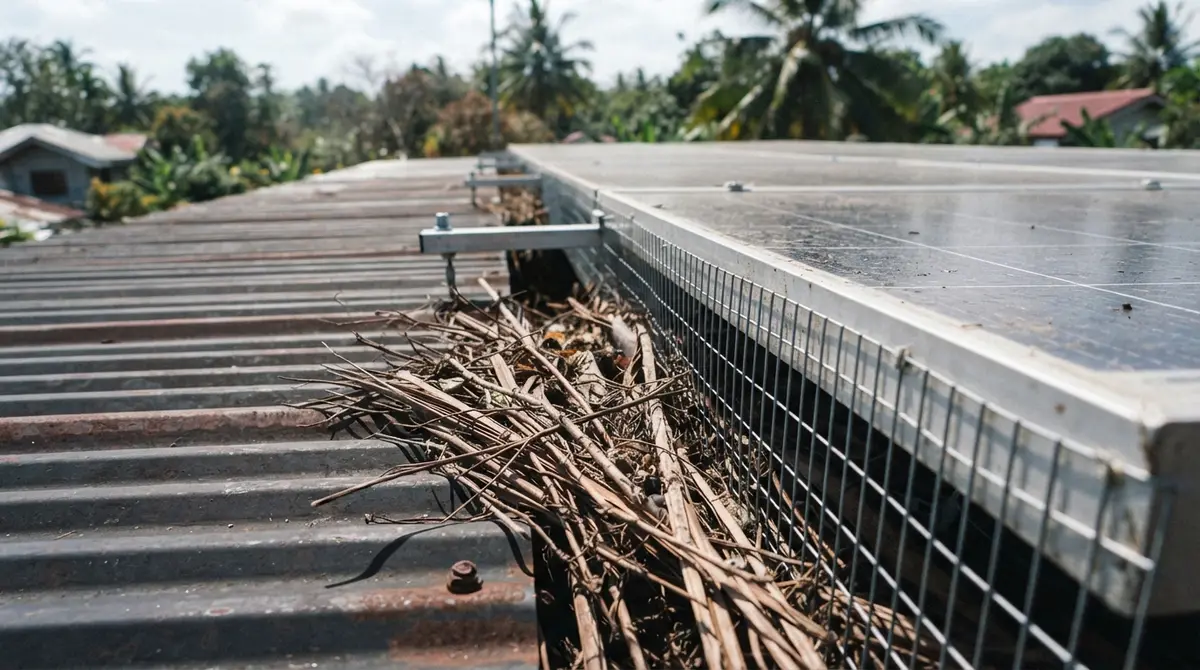
The gap between your panels and the roof is shaded, sheltered from rain, warm, and safe from predators. That is close to ideal nesting habitat, which is why pigeons and maya find it so quickly in Philippine cities.
Left alone, a nesting colony causes more damage than most people expect — and the worst of it is not the mess.
What actually goes wrong
Droppings on panels. Concentrated, opaque, and stubborn. Unlike dust they do not rinse off in rain. A dropping sitting on one spot acts exactly like shade, and persistent shade on a few cells is how hot spots form — which is a safety issue, not just a performance one.
Blocked drainage. Nesting material accumulates and holds water against the roof surface. That is how you end up with corrosion, and eventually a roof leak, in a spot you cannot see.
Chewed cabling. The genuinely dangerous one. Birds pull at and strip cable insulation. Exposed DC conductor on a live array is a serious fault — the array carries voltage whenever the sun is up, as covered in DC breaker sizing and isolation.
Pests and smell. Nests bring mites and lice, and in numbers the smell reaches the house.
Lost airflow. Panels need air moving underneath to stay cool. A packed nest blocks it, and hotter panels produce less — which matters more in Philippine heat than in temperate climates.
The fix that works
Mesh skirting around the array perimeter. A fine, rigid mesh clipped to the panel frames closes the gap while still allowing airflow underneath.
Two things make the difference between a good job and a bad one:
No drilling into panel frames. This is critical. Drilling a panel frame voids most manufacturer warranties and can compromise the frame’s structural integrity. Proper mesh systems use clips that grip the frame without penetrating it. If anyone proposes drilling, stop them.
Clear the nest first. Fitting mesh over an occupied nest traps birds and leaves the debris in place, which is both cruel and useless. Clear, clean, inspect the cabling, then close it up.
What does not work
| Approach | Why it fails here |
|---|---|
| Spikes | Designed for ledges, not for an open horizontal gap |
| Repellent gel | Degrades fast under Philippine sun and rain |
| Reflective tape, decoys | Birds habituate within weeks |
| Ultrasonic devices | No reliable evidence of effect |
| Doing nothing | The colony grows and the damage compounds |
Physical exclusion is the only approach that reliably solves it.
Timing and cost
Fit it before birds establish, if you can. Retrofitting after a colony has settled means clearing nests, cleaning droppings off panels, and inspecting cable damage — all more work than prevention.
The job is inexpensive relative to what it protects, and it is best combined with a scheduled clean or maintenance visit since the installer is already set up for roof access.
It is not a DIY job. It means working on the roof around a live array, on sheet roofing that is not designed to be walked on, and getting the fixing method wrong risks your warranty.
Worth asking at install time
If you are still at the quotation stage, ask whether bird mesh can be included from the start. It is far cheaper as part of the original scope than as a separate visit later, and in urban Philippine locations the question is usually when birds arrive rather than whether.
Add a perimeter check to your routine inspections — see solar monitoring for what else is worth keeping an eye on. Catching a new nest in its first weeks is a five-minute conversation; catching it in year three is a repair.
Frequently asked questions
Why do birds nest under solar panels?
The gap between the panels and the roof is shaded, sheltered from rain, and warm. That is close to ideal nesting habitat, and it is safe from most predators. Pigeons and maya are the usual occupants in Philippine cities.
What damage do birds actually cause?
Droppings on panels block light and can trigger hot spots. Nesting material blocks roof drainage and holds moisture against the roof. Birds also chew and pull at cable insulation, which is the genuinely dangerous one.
What is the standard fix?
Mesh skirting clipped to the panel frames around the perimeter of the array, closing the gap while allowing airflow. Fitted correctly it is unobtrusive and effective, and it does not restrict the ventilation panels need.
Will bird proofing void my warranty?
It can if it is done badly. Never let anyone drill into panel frames to fix mesh — that voids most panel warranties and can compromise the frame. Proper systems use clips that grip the frame without penetrating it.
Do spikes or repellent gel work?
Not for this problem. Spikes work on ledges, not on the open gap under an array. Gels degrade quickly in Philippine sun and rain. Physical exclusion with mesh is what actually solves it.
Can I fit mesh myself?
Not advisable. It means working on the roof around a live array, and doing it wrong risks both your warranty and your safety. It is an inexpensive job for the installer, often best combined with a scheduled clean.