Solar Panel Fire Risk in the Philippines: An Honest Look
TL;DR
Solar panel fires are rare relative to the number of systems installed, but they do happen, and the causes are consistent: poor DC connections that arc, hot spots left unaddressed, and cheap or mismatched components. Quality installation and components, plus routine monitoring, are the real prevention — and it's worth confirming your homeowners or fire insurance covers the array.
Solar panel fires are rare relative to how many systems are installed, but they’re a real, documented risk with consistent, mostly preventable causes. The pattern across cases isn’t “panels spontaneously combust” — it’s a bad DC connection, an unaddressed hot spot, or cheap components that weren’t rated or installed correctly.
What actually causes a solar fire?
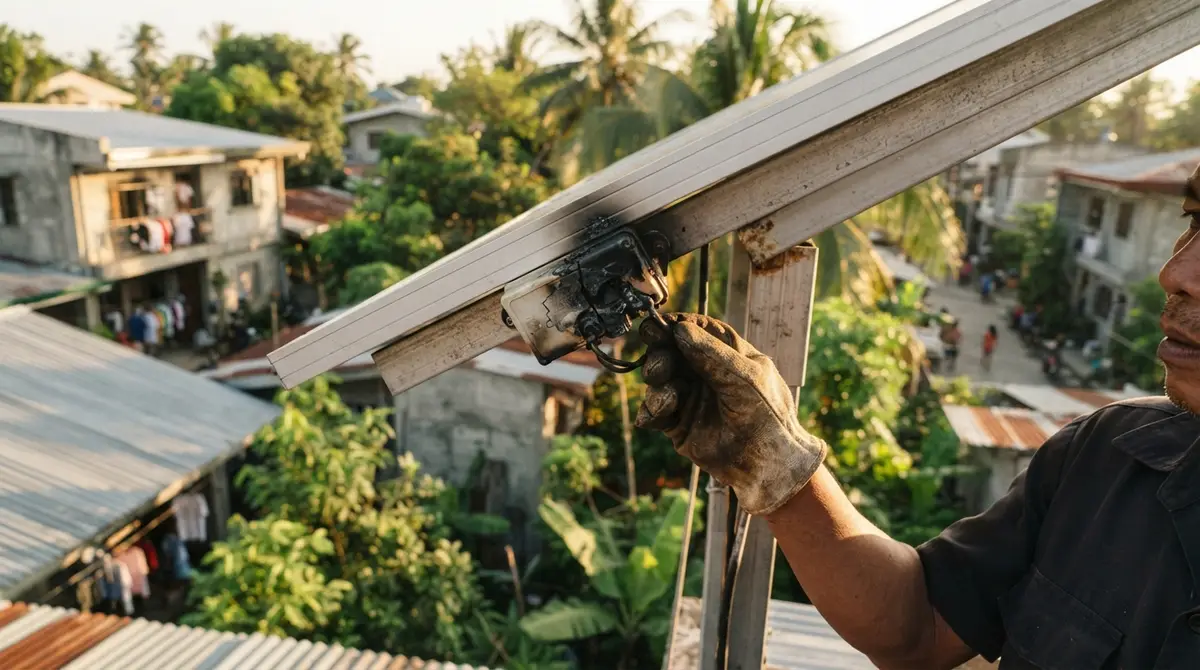
Poor DC connections that arc. A loose, corroded, or improperly crimped connector lets current jump a small gap instead of flowing cleanly. Because DC arcs don’t self-extinguish the way many AC arcs do, they can sustain long enough to ignite the connector housing or nearby material. This is one reason connector quality and correct installation matter more than people expect — see MC4 connectors explained.
Unresolved hot spots. A shaded, cracked, or defective cell forced to dissipate power as heat instead of producing it. Left long enough, that localized heat degrades the encapsulant and backsheet and can ignite. See solar panel hotspots for the full mechanism and why it’s treated as urgent rather than cosmetic.
Cheap or mismatched components. Off-brand connectors, undersized cabling, or combiner boxes not properly rated for the current running through them are more prone to the loose connections and heat buildup that lead to arcing. This is part of what you’re paying for with tier-1 vs. tier-2 panels and reputable balance-of-system components generally.
Electrical faults elsewhere in the system. Less commonly, a fault in the inverter or downstream wiring rather than the array itself.
What raises the risk?
| Factor | Why it matters |
|---|---|
| Non-matching connector brands | More prone to loose or incomplete connections |
| Undersized or damaged DC cabling | Heats under load, degrades insulation over time |
| No surge protection | Leaves the system exposed to voltage spikes that stress components |
| Skipped or rushed installation | Loose torque on connections is a common root cause |
| No production monitoring | A developing hot spot or arc fault goes unnoticed longer |
What actually prevents it?
Quality, matched components installed correctly, by an installer who torques connections properly and doesn’t mix incompatible parts. Add surge protection to your system, since voltage spikes — common during Philippine thunderstorms — stress components and shorten their working life; see solar surge protection. Keep an eye on your production data so a string that’s underperforming, a possible early sign of a developing fault, gets caught and inspected rather than left to worsen.
Does system age change the picture?
Somewhat. Connectors and cabling see years of thermal cycling — heating up under sun, cooling at night — and that repeated expansion and contraction can gradually loosen a connection that was torqued correctly at installation. This is part of why routine visual checks and production monitoring matter for an older system, not just a newly installed one: a connection that was fine on day one isn’t guaranteed to stay that way for 25 years without ever being looked at again.
Where does insurance fit in?
Coverage isn’t automatic across every policy. Some homeowners or fire insurance policies extend to a rooftop solar array without any extra step; others require you to declare the array or add it as a specific rider. Confirm directly with your insurer rather than assuming — see solar panel insurance in the Philippines for what to ask about and what’s typically excluded.
The honest takeaway
Fire risk from solar is low, but it isn’t zero, and the causes are consistent enough to be preventable: don’t cut corners on components or installation quality, don’t skip surge protection, and don’t ignore a developing hot spot or underperforming string. If you smell burning or see scorching near the array, treat it as an emergency and call an electrician immediately rather than investigating yourself — the DC side stays live whenever there’s daylight.
Frequently asked questions
How common are solar panel fires?
Rare relative to the total number of installed systems, but not zero. Most documented cases trace back to a specific, preventable cause rather than the panels simply catching fire on their own.
What actually causes solar fires?
The recurring causes are poor DC connections that arc over time, unresolved hot spots that scorch the backsheet, and cheap or mismatched components — connectors, cabling, or combiner boxes — that weren't rated or installed correctly.
What is arcing and why is it dangerous?
Arcing happens when a loose or degraded DC connection allows current to jump a small gap instead of flowing cleanly, generating intense localized heat. Because DC arcs don't self-extinguish the way AC ones often do, they can sustain long enough to ignite nearby material.
Does using cheap solar equipment increase fire risk?
It can. Connectors, cabling, and combiner boxes that aren't properly rated or that mix incompatible brands are more prone to loose connections and arcing over time than matched, tier-1 components installed correctly.
Does homeowners insurance cover a solar-related fire in the Philippines?
It depends on the policy — some homeowners or fire policies extend to a rooftop array automatically, others need it declared or added as a rider. Confirm with your insurer specifically, since assuming coverage without checking is a common gap.
How do I reduce fire risk in my own system?
Use a reputable installer with quality, matched components, avoid overloading connectors or mixing connector brands, and keep an eye on your production monitoring so a developing hot spot or underperforming string gets caught early rather than left to worsen.